
Scroll any platform for five minutes.
You’ll notice something strange.
The editing styles look similar.
The hooks sound familiar.
The advice overlaps.
The tone feels interchangeable.
It’s not that creators aren’t talented. It’s that most of them are optimizing for safety.
And safety creates sameness.
In 2026, blending in isn’t caused by a lack of skill. It’s caused by a lack of perspective.
The Comfort Trap
Many creators start by studying what works.
They reverse-engineer viral posts and follow trending formats. They copy pacing, caption structure, camera framing. At first, that makes sense. You need reps. You need pattern recognition.
But at some point, replication becomes identity.
And when your content sounds like five other creators in your niche, you disappear into the scroll.
The algorithm doesn’t punish you for blending in. The audience does. They simply don’t remember you.
Attention has become selective.
Memorability is the new metric.
The Real Reason Most Creators Blend In
It isn’t because they lack ideas.
It’s because they’re afraid to commit to a viewpoint.
A distinct point of view requires risk. It requires disagreeing with mainstream advice. It means taking a stand where some percentage of people will push back.
Neutral content rarely creates loyalty. It creates mild approval.
Loyalty is built when someone thinks, “Finally, someone who says what I’ve been thinking.”
That reaction only happens when you stop trying to appeal to everyone.
Information Is Everywhere. Interpretation Is Scarce.
Anyone can summarize trending topics now.
AI can generate listicles instantly. Search engines are full of beginner guides. Surface-level advice has been commoditized.
What’s rare is interpretation.
- Your perspective on an issue.
- Your lived experience.
- Your disagreement with common frameworks.
- Your willingness to say, “I don’t buy into this.”
In 2026, the creators who stand out are not the ones who provide more information. They provide clearer interpretation.
They filter the noise.
And filtering requires conviction.
Distinct POV Is a Strategic Asset
When you have a clear stance, everything becomes easier.
Your content themes become obvious. Even your tone stabilizes. Your audience self-selects. Brand partnerships align more naturally because companies understand what you represent.
Without a defined POV, you drift.
You experiment endlessly. You pivot randomly. Your content feels reactive instead of intentional.
A point of view acts like gravity. It pulls your content into alignment.
How to Build a Distinct POV
Start by examining what frustrates you in your niche.
- What advice feels outdated?
- What common belief do you quietly disagree with?
- What mistakes do you see repeated over and over?
Your frustration is often a signal.
Distinct POVs are rarely invented. They are revealed through strong opinions you’ve been hesitant to voice.
Instead of saying, “Here are five ways to grow on Instagram,” you might say, “Why Most Instagram Growth Advice Is Misleading.” That subtle shift frames you as a thinker, not just a teacher.
The goal is not to be controversial for attention. It’s to be clear.
Clarity Creates Magnetic Branding
When someone lands on your profile, they should quickly understand what you believe.
Not just what you talk about.
Beliefs anchor identity. Topics are just containers.
If you create fitness content, do you believe discipline is everything? Or do you advocate balance and sustainability? If you discuss business, do you prioritize slow leverage or aggressive scaling?
Two creators can cover the same subject but feel completely different based on belief.
That difference is brand.
The Confidence Layer
Here’s where most creators hesitate.
Once you decide on a distinct point of view, you must communicate it with confidence.
Delivery matters.
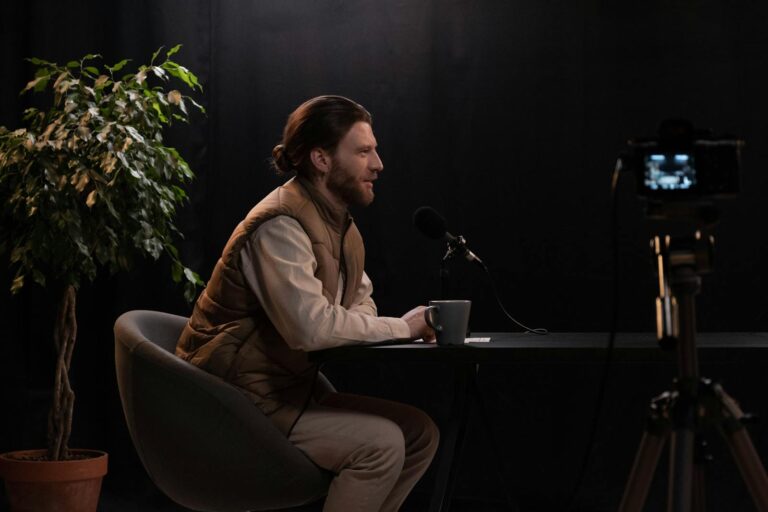
Clear audio. Controlled pacing. Intentional camera framing. Professional presentation reinforces the seriousness of your ideas. Using a high-quality microphone like the Shure SM7B Vocal Dynamic Microphone can immediately elevate how authority feels on screen or in podcasts.
When your voice sounds strong, your words carry more weight.
Subtle production upgrades amplify conviction.
Opinion Does Not Mean Arrogance
There’s a difference between being opinionated and being dismissive.
Strong POV creators acknowledge nuance. They invite discussion. They evolve when presented with better evidence.
What makes them compelling is that they are willing to be specific.
Instead of saying, “It depends,” they say, “In most cases, this is the smarter approach, and here’s why.”
Specificity builds trust.
Vagueness dilutes it.
The Risk of Staying Neutral
Neutrality can feel safe in the short term.
But safe brands plateau.
If no one ever disagrees with you, it might mean no one feels strongly about your message at all.
Distinct positioning inevitably repels some people. That is not a downside. It’s proof that your message has edges.
Edges are what create identity.
And identity is what converts followers into community.
Opinion-Driven Branding in 2026
Attention spans are shrinking. Competition is rising. AI is making generic content effortless.
The only defensible advantage left is perspective.
You cannot compete with automation by sounding automated.
You compete by sounding human, grounded, and clear about what you believe.
Most creators blend in because they are trying to be acceptable.
The creators who stand out choose to be recognizable instead.
If you want long-term growth, stop optimizing only for reach.
Start optimizing for resonance.
That is where distinct POV turns into brand authority.
And in 2026, authority is built on conviction.