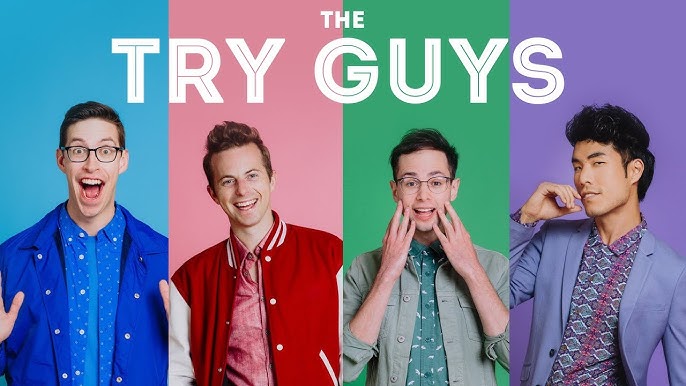

The Try Guys did not start as a polished production company.
They started as coworkers trying things on camera.
That simplicity became their edge.
What began as a BuzzFeed video experiment evolved into an independent media company, multiple revenue streams, touring events, podcasts, and a fiercely loyal community. However, their long-term growth did not come from production scale alone.
It came from authenticity.
In a crowded creator economy, their journey offers an important lesson about building a brand around identity instead of trends.
The Power of a Clear Concept
At its core, The Try Guys built around a strong premise.
Four men try things outside their comfort zone.
That concept was simple, repeatable, and emotionally engaging. It allowed for endless variation while maintaining a clear identity. Whether they were trying ballet, cooking without recipes, or exploring pregnancy simulations, the format remained consistent.
Consistency builds recognition.
When viewers know what to expect structurally, they are more likely to return. This early format clarity became the foundation for long-term loyalty.
Friendship as a Brand Asset
Unlike many creator groups formed for clout, The Try Guys built on genuine friendship.
That authenticity translated on camera.
Viewers did not just watch challenges. They watched relationships. They observed inside jokes, vulnerability, disagreements, and growth.
Because of this emotional layer, the brand moved beyond content.
It became community.
When creators rely only on format, they can be replaced. When they rely on chemistry and personality, they build emotional attachment.
Emotional attachment strengthens retention.
Leaving BuzzFeed and Owning the Brand
One of the most critical moments in their growth was the decision to leave BuzzFeed.
This was a risk.
However, it showed commitment to ownership. By launching their own channel and company, they transformed from talent into operators. That shift allowed them to control production, monetization, and brand direction.
Ownership builds flexibility.
Instead of relying on platform algorithms alone, they expanded into podcasts, live tours, merchandise, and subscription content. Each expansion reinforced brand independence.
Creators who think long term eventually realize that audience ownership matters as much as audience size.
Format Innovation Keeps Content Fresh
While their original hook was strong, repetition alone would not sustain growth.
Therefore, The Try Guys continued to evolve formats.
Shows like “Without a Recipe” added competition and unpredictability. Personal documentaries introduced deeper vulnerability. Individual projects allowed each member to build sub-audiences while staying aligned with the core brand.
This layering strategy prevented stagnation.
Rather than abandoning the core identity, they expanded it.
Expansion feels safe when the foundation is clear.
Navigating Public Challenges
No long-term creator brand escapes difficulty.
Public controversy and internal transitions tested The Try Guys in very visible ways. However, their audience loyalty remained unusually strong.
Why?
Because they had built trust before crisis.
Their transparency, structured communication, and focus on continuity reinforced stability. Instead of ignoring the issue, they addressed it directly and protected the long-term brand narrative.
Trust built over years can absorb shocks.
Brands built only on virality rarely survive turbulence.
Production Quality Supports Identity
As their company grew, so did production value.
However, production supported authenticity rather than replacing it. Cleaner sets, improved audio, and structured storytelling enhanced the viewer experience without removing relatability.
Strong production tools often make long-term brand evolution smoother. Reliable video setups, stable editing workflows, and consistent visual style reinforce professionalism. Many growing creators eventually adopt durable equipment such as the Sony FX30 Cinema Line Camera to maintain broadcast-level quality as operations scale.
However, equipment never replaced personality.
Personality remained central.
Building a Loyal Fandom Instead of Casual Viewers
The Try Guys did not aim for passive consumption.
They cultivated fandom.
Podcasts allowed deeper discussion. Live tours brought audiences into shared physical experiences. Membership programs created exclusivity and belonging.
This multi-layered approach strengthened emotional investment.
Casual viewers scroll.
Fans support.
When creators focus on shared identity rather than single uploads, loyalty compounds.
Lessons for Creators in 2026
The success of The Try Guys reinforces several truths.
- First, a clear and repeatable concept builds recognizability.
- Second, genuine relationships increase retention more than flashy edits.
- Third, ownership enables strategic expansion.
- Fourth, evolving formats prevent stagnation without diluting identity.
Most importantly, authenticity is not a tactic.
It is structure.
When audiences sense that what they are watching reflects real relationships and lived experiences, they invest more deeply.
Final Thoughts
The Try Guys built a lasting brand because they focused on connection before perfection.
They understood their identity. They refined their formats. They expanded strategically.
And through both growth and controversy, they prioritized transparency and loyalty.
In 2026, creators face more competition than ever. Yet the core principle remains unchanged.
Authenticity, when structured around a strong concept, scales.
And brands built on real connection endure far longer than brands built on trends.